1983 BMW E24, the iconic coupe that defined an era, stands as a testament to German engineering and design prowess. This model, known as the 6 Series, captured hearts with its sleek lines, powerful engine, and luxurious interior, quickly becoming a symbol of both performance and elegance.
The E24’s journey began in 1976, introducing a bold new design language for BMW. It was a departure from the boxier shapes of its predecessors, boasting a low-slung profile, a long hood, and a flowing roofline. Underneath the skin, the E24 was engineered for both comfort and exhilarating driving experiences, offering a range of powerful engines and a sophisticated suspension that delivered precise handling and exceptional road manners.
Introduction to the 1983 BMW E24
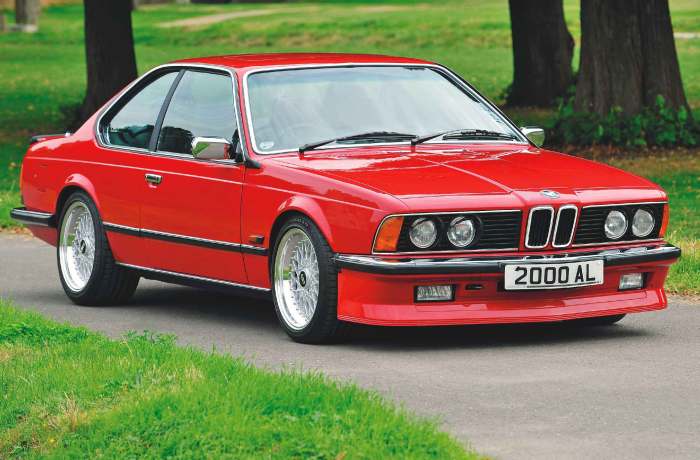
The 1983 BMW E24, better known as the 6 Series, marked a pivotal moment in BMW’s history, solidifying its reputation for luxury performance and timeless design. This generation of the 6 Series, produced from 1976 to 1989, represented a significant evolution for the marque, introducing advanced technology and refined aesthetics that would define future BMW models.
The E24’s design, penned by Paul Bracq, exemplified the elegance and sophistication that came to be associated with BMW’s grand tourers. Its sleek, elongated lines, characterized by a low-slung profile and a long hood, were a testament to the car’s focus on both performance and comfort.
The E24’s engineering, particularly its robust chassis and powerful engines, underscored BMW’s commitment to delivering a driving experience that was both exhilarating and refined.
Engineering and Design Highlights
The E24’s design and engineering were characterized by a focus on performance and luxury, setting a new standard for grand tourers.
- Aerodynamic Design:The E24 featured a remarkably low drag coefficient of 0.35, achieved through its streamlined bodywork and integrated spoilers. This aerodynamic efficiency contributed to the car’s exceptional fuel economy and stability at high speeds.
- Chassis and Suspension:The E24’s chassis was designed for both comfort and handling precision. The front suspension, featuring MacPherson struts and an anti-roll bar, provided responsive steering and precise cornering. The rear suspension, utilizing a semi-trailing arm design, ensured stability and a smooth ride.
- Powerful Engines:The E24 was offered with a range of powerful engines, including the iconic M635CSi, which featured a 3.5-liter inline-six engine producing 286 horsepower. The M635CSi’s engine was renowned for its smooth power delivery and exhilarating acceleration.
Production and Development
The E24’s development and production were marked by several notable events and innovations.
The 1983 BMW E24, with its sleek coupe design and powerful engine, cemented the brand’s reputation for sporty luxury. This legacy was further solidified with the arrival of the 1993 BMW 8 Series , which offered a more refined and sophisticated driving experience, while still retaining the core principles of performance and elegance that defined the E24.
- Debut at the 1976 Paris Motor Show:The E24 was unveiled to the world at the 1976 Paris Motor Show, where it immediately garnered attention for its sleek design and advanced engineering.
- M635CSi:In 1983, BMW introduced the high-performance M635CSi, which became a legend in its own right. This model featured a 3.5-liter inline-six engine, a five-speed manual transmission, and a host of performance upgrades. The M635CSi was a testament to BMW’s commitment to pushing the boundaries of performance and engineering.
- Limited Production:The E24 was produced in relatively limited numbers, with a total of approximately 86,000 units built over its 13-year production run. This exclusivity contributed to the car’s desirability and its status as a collector’s item today.
Design and Styling
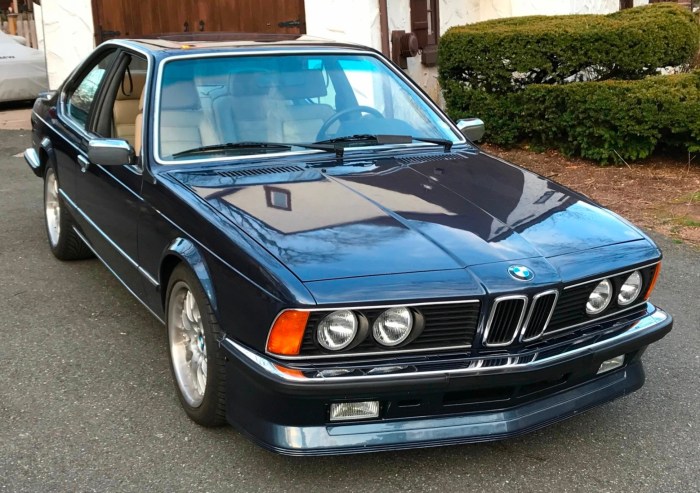
The 1983 BMW E24, better known as the 6 Series, was a testament to the German automaker’s commitment to elegant and sophisticated design. Its sleek, coupe-like silhouette was a departure from the more boxy designs of the time, and it quickly established itself as a benchmark for automotive beauty.
Design Philosophy
The E24’s design was a product of its time, influenced by the growing popularity of sporty and aerodynamic vehicles. BMW’s designers aimed to create a car that was both visually striking and aerodynamically efficient. They achieved this by incorporating a number of key design elements, including a low-slung profile, a long hood, a fastback roofline, and a prominent front grille.
These elements worked together to give the E24 a distinctive and elegant appearance.
Comparison with Other BMW Models
The E24’s design was distinct from other BMW models of the era. While it shared the company’s signature kidney grille and Hofmeister kink, its overall shape was more streamlined and luxurious than the more utilitarian 3 Series or 5 Series.
The E24’s design was also more daring than the conservative design of the contemporary 7 Series, which was aimed at a more traditional audience.
Key Features that Contributed to Timeless Appeal
The E24’s timeless appeal can be attributed to a number of key features. These include:
- Proportions:The E24’s long hood, short overhangs, and low roofline created a visually balanced and elegant profile.
- Aerodynamics:The E24’s streamlined shape was not only aesthetically pleasing but also helped to improve fuel efficiency and stability at high speeds.
- Details:The E24’s design was characterized by subtle details that added to its overall refinement. These included the recessed door handles, the elegant chrome trim, and the distinctive taillights.
E24 Variants and Color Options
The E24 was available in a variety of variants, each with its own unique design elements. The most popular variant was the 635CSi, which featured a powerful 3.5-liter inline-six engine and a sporty suspension. Other variants included the 633CSi and the 628CSi, which offered a more affordable option.
The E24 was also available in a wide range of colors, from classic black and silver to more vibrant hues like red and blue.
Performance and Handling
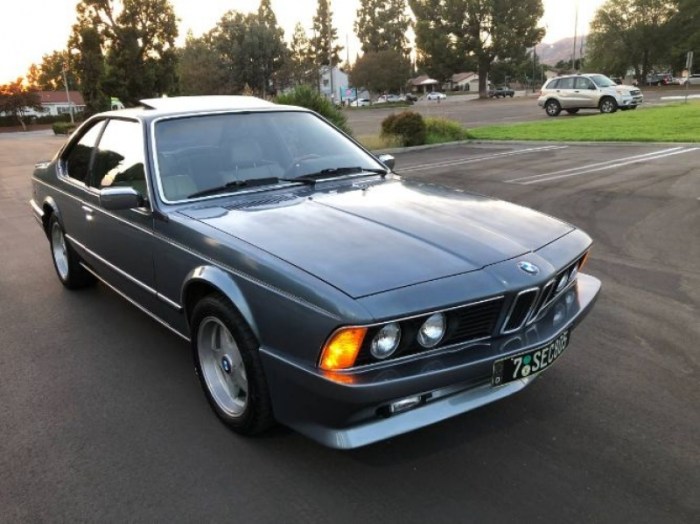
The BMW E24 was renowned for its exceptional performance and handling, a testament to its engineering prowess. The E24’s combination of powerful engines, lightweight construction, and precise suspension tuning resulted in a driving experience that was both exhilarating and refined.
Engine Options and Performance
The E24 was offered with a range of powerful inline-six engines, each delivering impressive performance. The base engine was the 2.8-liter M20, producing 177 horsepower, while the top-of-the-line M635CSi boasted a 3.5-liter M88 engine, generating 286 horsepower. The E24’s engines were known for their smooth power delivery, responsive throttle, and a distinctive, throaty exhaust note.
Handling and Driving Dynamics
The E24’s handling was praised for its precision, balance, and agility. Its independent suspension system, featuring MacPherson struts at the front and a semi-trailing arm rear suspension, provided excellent control and feedback. The E24’s lightweight construction, achieved through the use of aluminum and composite materials, further enhanced its handling prowess.
Its low center of gravity contributed to its remarkable cornering abilities.
Impact of Lightweight Construction, 1983 BMW E24
The E24’s lightweight construction was a key factor in its exceptional performance. By minimizing weight, BMW engineers were able to optimize the car’s power-to-weight ratio, resulting in quicker acceleration and improved handling. The E24’s lightweight design also contributed to its fuel efficiency, making it a desirable choice for drivers who valued both performance and practicality.
Notable E24 Race Cars
The E24’s performance and handling characteristics made it a popular choice for motorsport enthusiasts. Notable E24 race cars include:
- BMW M635CSi:The M635CSi was a successful competitor in touring car racing, achieving victories in the European Touring Car Championship and the German Touring Car Championship.
- BMW 635CSi:The 635CSi, with its powerful engine and agile handling, was a formidable contender in endurance racing, competing in events like the 24 Hours of Le Mans and the Spa 24 Hours.
Interior and Features
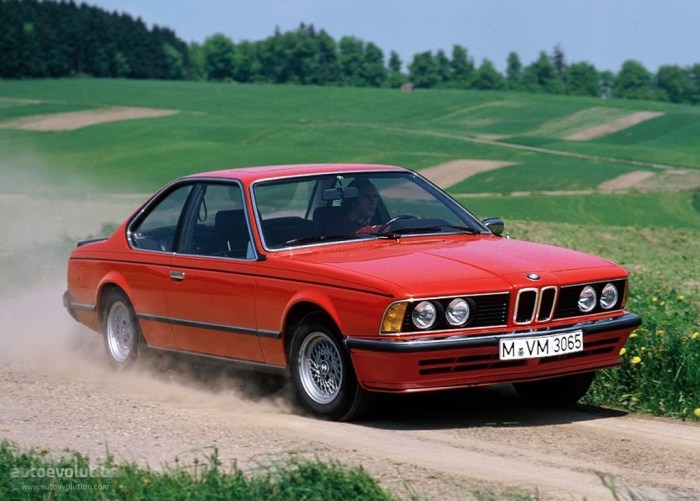
The interior of the 1983 BMW E24 was a testament to the brand’s commitment to luxury and driver-centric design. It exuded an air of sophistication and quality that set it apart from its contemporaries.
Interior Design and Materials
The E24’s interior was characterized by its minimalist design and high-quality materials. The dashboard was a symphony of simplicity, featuring clean lines and a focus on functionality. The use of leather, wood, and metal accents throughout the cabin added a touch of luxury and sophistication.
The seats were contoured and supportive, providing both comfort and excellent lateral support during spirited driving. The overall effect was one of refined elegance, reflecting the E24’s status as a true grand tourer.
Key Features and Amenities
The E24 was equipped with a range of features and amenities designed to enhance the driving experience. The dashboard featured a comprehensive instrument cluster that provided the driver with all the necessary information. The seats were adjustable for both height and recline, ensuring a comfortable driving position for drivers of all sizes.
The 1983 BMW E24, a sleek coupe known for its elegant lines and powerful engine, was a pinnacle of German engineering. While the E24 was a standout on the road, BMW’s heritage also extended to motorcycles, such as the 1978 BMW R80 , a classic air-cooled boxer that offered a different kind of driving experience.
The E24’s sophisticated design and the R80’s rugged simplicity both showcased BMW’s commitment to quality and performance, albeit in distinct ways.
The E24 also came equipped with a standard sound system, although the quality of the system varied depending on the model year and options selected.
Comparison to Other Luxury Cars
In comparison to other luxury cars of the time, the E24’s interior stood out for its blend of luxury and sportiness. While some competitors focused on opulent features and excessive ornamentation, the E24 prioritized driver-centric design and functionality. The use of high-quality materials and the minimalist design aesthetic created a sense of refined elegance that was both timeless and appealing.
Standard and Optional Features
The following table Artikels the standard and optional features offered on the 1983 BMW E24:| Feature | Standard | Optional ||—|—|—|| Power steering | Yes | || Air conditioning | Yes | || Power windows | Yes | || Power locks | Yes | || Cruise control | Yes | || Leather upholstery | Yes | || Heated seats | Yes | || Sunroof | Yes | || Rear window defroster | Yes | || AM/FM radio | Yes | || Cassette player | Optional | || Automatic transmission | Optional | || Sport suspension | Optional | || Alloy wheels | Optional | || Fog lamps | Optional | || Rear spoiler | Optional | |
Legacy and Impact
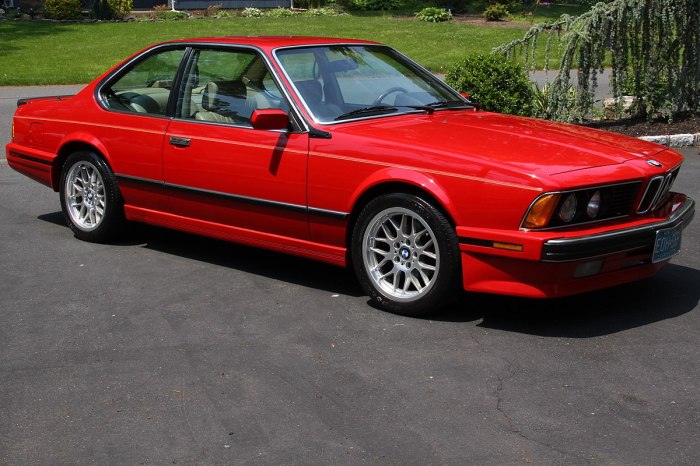
The BMW E24 6 Series, a masterpiece of automotive design and engineering, left an indelible mark on the automotive world, influencing both BMW’s brand image and the design language of subsequent models. Its enduring appeal stems from its sleek, timeless aesthetics, exhilarating performance, and luxurious interior, solidifying its place as a true icon.
Influence on Subsequent BMW Models
The E24’s influence can be seen in the design language of subsequent BMW models. Its flowing lines, long hood, and distinctive Hofmeister kink, a subtle curve at the rear window, became signature elements of BMW’s design philosophy. These design cues have been carried forward in various BMW models, from the E30 3 Series to the modern 8 Series, ensuring the E24’s legacy continues to shape the brand’s aesthetic identity.
Anecdotes and Stories from Owners and Enthusiasts
The E24’s allure extends beyond its design and performance; it has captured the hearts of enthusiasts worldwide, fostering a passionate community. Owners and enthusiasts often share their experiences, highlighting the car’s unique character and driving pleasure.
“The E24 is more than just a car; it’s an experience. Every drive is a journey, a symphony of power and grace.”
A seasoned E24 owner.
The E24’s timeless design, coupled with its robust build quality, has ensured its enduring appeal, with many owners meticulously preserving their vehicles. The car’s rarity and historical significance have also contributed to its high value in the collector car market.
Timeline of Significant Milestones
- 1976:The BMW E24 6 Series is introduced, replacing the E9 coupe. Its sleek design, powered by a range of six-cylinder engines, quickly establishes it as a luxurious and sporty grand tourer.
- 1978:The M635CSi, a high-performance variant powered by a 3.5-liter inline-six engine, is introduced, further cementing the E24’s reputation for performance and exclusivity.
- 1982:The E24 receives a facelift, featuring updated bumpers and taillights, further enhancing its elegant aesthetic.
- 1989:Production of the BMW E24 6 Series ends, leaving behind a legacy of timeless design, exhilarating performance, and enduring appeal.
Collecting and Restoring
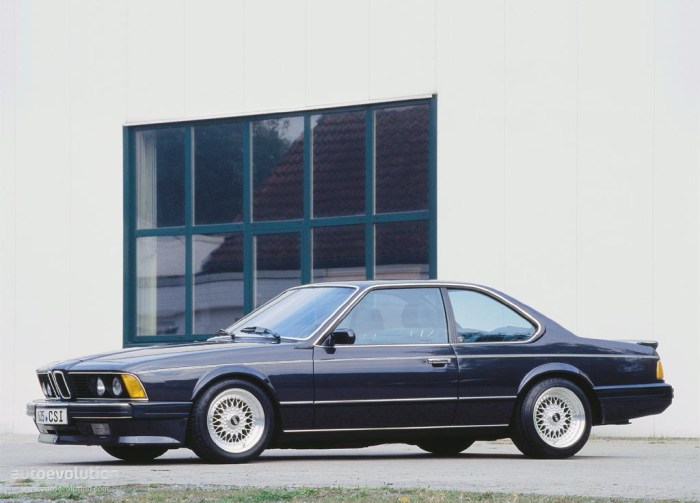
Owning and restoring a 1983 BMW E24 is a rewarding experience for enthusiasts who appreciate the car’s timeless design, performance, and historical significance. The process, however, presents unique challenges that require a combination of passion, knowledge, and resources.
Challenges and Rewards
The 1983 BMW E24, like any classic car, presents its own set of challenges for collectors and restorers. Finding a well-preserved example can be difficult, and even then, restoration can be a time-consuming and expensive endeavor. The availability of parts can be limited, particularly for rarer or specialized components.
Additionally, maintaining the car’s original specifications and ensuring its mechanical integrity requires specialized knowledge and expertise. However, the rewards are equally substantial. The satisfaction of bringing a classic E24 back to its former glory is immense, and the experience can deepen one’s appreciation for the car’s design, engineering, and heritage.
The 1983 BMW E24, with its sleek lines and powerful engine, embodied the spirit of German engineering. While the E24 was a symbol of luxury and performance on the road, BMW’s legacy extended beyond cars, as seen in their 2004 BMW Motorcycle lineup.
These motorcycles offered a similar blend of performance and style, showcasing BMW’s commitment to innovation across various automotive segments. The E24, however, remains a timeless classic, capturing the imagination of car enthusiasts even today.
Availability of Parts and Resources
The availability of parts for the 1983 BMW E24 varies depending on the specific component. Common parts, such as engine components, brakes, and suspension parts, are readily available from both original equipment manufacturers (OEMs) and aftermarket suppliers. However, finding rare or discontinued parts can be more challenging.
Online forums, specialized E24 parts suppliers, and classic car parts retailers can be valuable resources for locating hard-to-find items.
Notable E24 Restorations
Numerous dedicated individuals and restoration shops have brought 1983 BMW E24s back to life, showcasing the car’s enduring appeal. One notable example is the restoration of a 1983 BMW E24 635CSi by the renowned German restoration company, AC Schnitzer. The car, meticulously restored to its original specifications, has become a prized possession for a collector, highlighting the dedication and expertise required for such projects.
E24 Restoration Resources and Communities
Restoring a 1983 BMW E24 can be significantly easier with the support of a dedicated community. Numerous online forums, social media groups, and clubs are dedicated to the E24, providing a platform for enthusiasts to share knowledge, advice, and resources.
These communities offer valuable insights into restoration techniques, parts sourcing, and troubleshooting.
| Resource | Description |
|---|---|
| BMW E24 Owners Club | A global community dedicated to the E24, providing forums, events, and resources for owners and enthusiasts. |
| E24-Forum.com | A popular online forum for E24 owners and restorers, offering technical advice, parts information, and restoration guides. |
| BMW CCA (BMW Car Club of America) | A national organization with local chapters, providing events, technical support, and a platform for connecting with other E24 enthusiasts. |
Cultural Significance: 1983 BMW E24
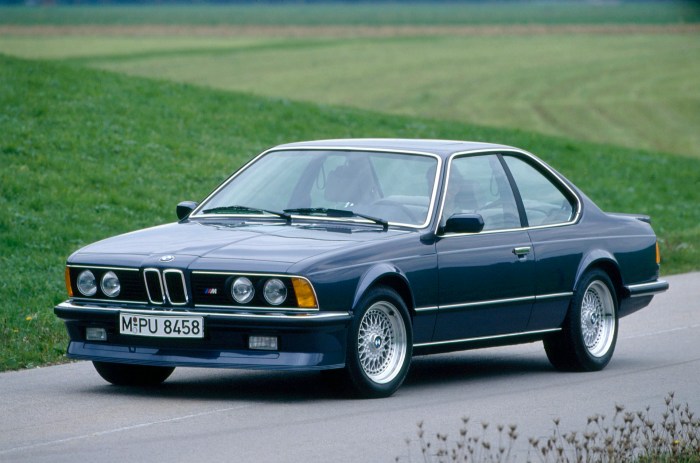
The BMW E24, with its timeless design and captivating performance, has transcended its status as a mere automobile and carved a niche in popular culture. From its iconic appearances in films and television shows to its enduring presence in art and advertising, the E24 has become a symbol of luxury, power, and sophistication.
Appearances in Media
The E24’s sleek silhouette and powerful presence have made it a favorite among filmmakers and television producers. Its appearances in popular media have further cemented its cultural significance.
- The E24 made its cinematic debut in the 1983 film “Risky Business,” where it served as the vehicle of choice for Tom Cruise’s character, Joel Goodsen. The film’s iconic scene featuring the E24 cruising down the streets of Chicago, with its top down and “Playing with the Boys” by Kenny Loggins blasting from the radio, solidified the car’s association with youthful rebellion and freedom.
- In the 1987 film “Beverly Hills Cop II,” Eddie Murphy’s character, Axel Foley, drives a black E24, showcasing the car’s appeal as a symbol of status and power.
- The E24 has also made appearances in popular television shows, such as “Miami Vice,” where it was often driven by the show’s main characters, Sonny Crockett and Ricardo Tubbs.
Representation in Art and Photography
The E24’s distinctive design has inspired countless artists and photographers, who have captured its beauty and elegance in their works.
- The E24’s sharp lines, flowing curves, and aggressive stance have made it a popular subject for automotive photography, often featured in magazines and car enthusiast websites.
- The car’s iconic status has also made it a favorite among artists, who have incorporated it into their paintings, sculptures, and other forms of art.
Use in Advertising and Marketing Campaigns
The E24’s image has been used extensively in advertising and marketing campaigns, often representing luxury, performance, and exclusivity.
- BMW itself has frequently featured the E24 in its advertising campaigns, highlighting its heritage and timeless appeal.
- Other brands have also used the E24 in their advertising, associating it with success, sophistication, and high-performance.
“The E24 is a timeless classic. It’s a car that you can’t help but admire. It’s a piece of automotive art.” Jerry Seinfeld, comedian and car enthusiast.
Conclusion
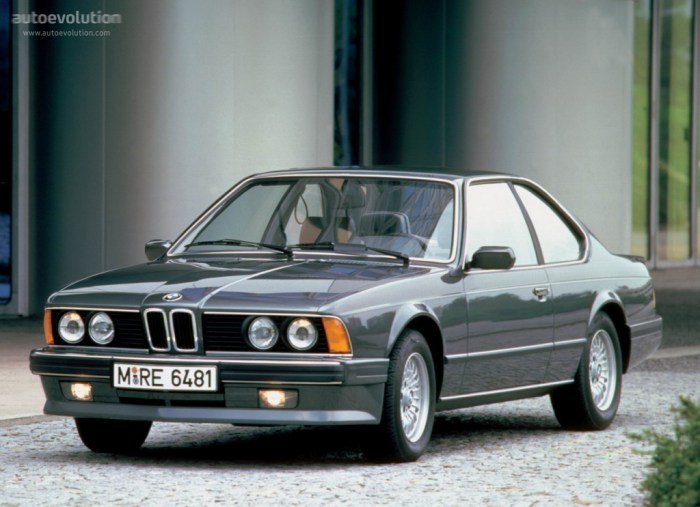
The 1983 BMW E24 remains a coveted classic, cherished by enthusiasts for its timeless design, exhilarating performance, and enduring legacy. Its impact on BMW’s design language and brand image is undeniable, influencing generations of future models. Today, the E24 continues to captivate collectors and drivers alike, offering a glimpse into an era of automotive excellence.